Focus on a region of opportunities
On 21 May 2026, AKA Ausfuhrkredit-Gesellschaft mbH in Frankfurt turned its attention to a region that is becoming increasingly important to German companies: Central, Eastern and South-Eastern Europe, the South Caucasus and Central Asia. Together with the Ost-Ausschuss der Deutschen Wirtschaft, AKA hosted the foreign trade conference “Financing German Exports and Investments in Eastern Europe and Central Asia – Expanded Economic Opportunities”. The event brought together representatives from companies, the financial sector, associations and institutions. The focus was on current market opportunities, geopolitical and macroeconomic conditions, and financing approaches that reliably support export and investment projects in the region.
Dynamism, proximity and the ability to deliver
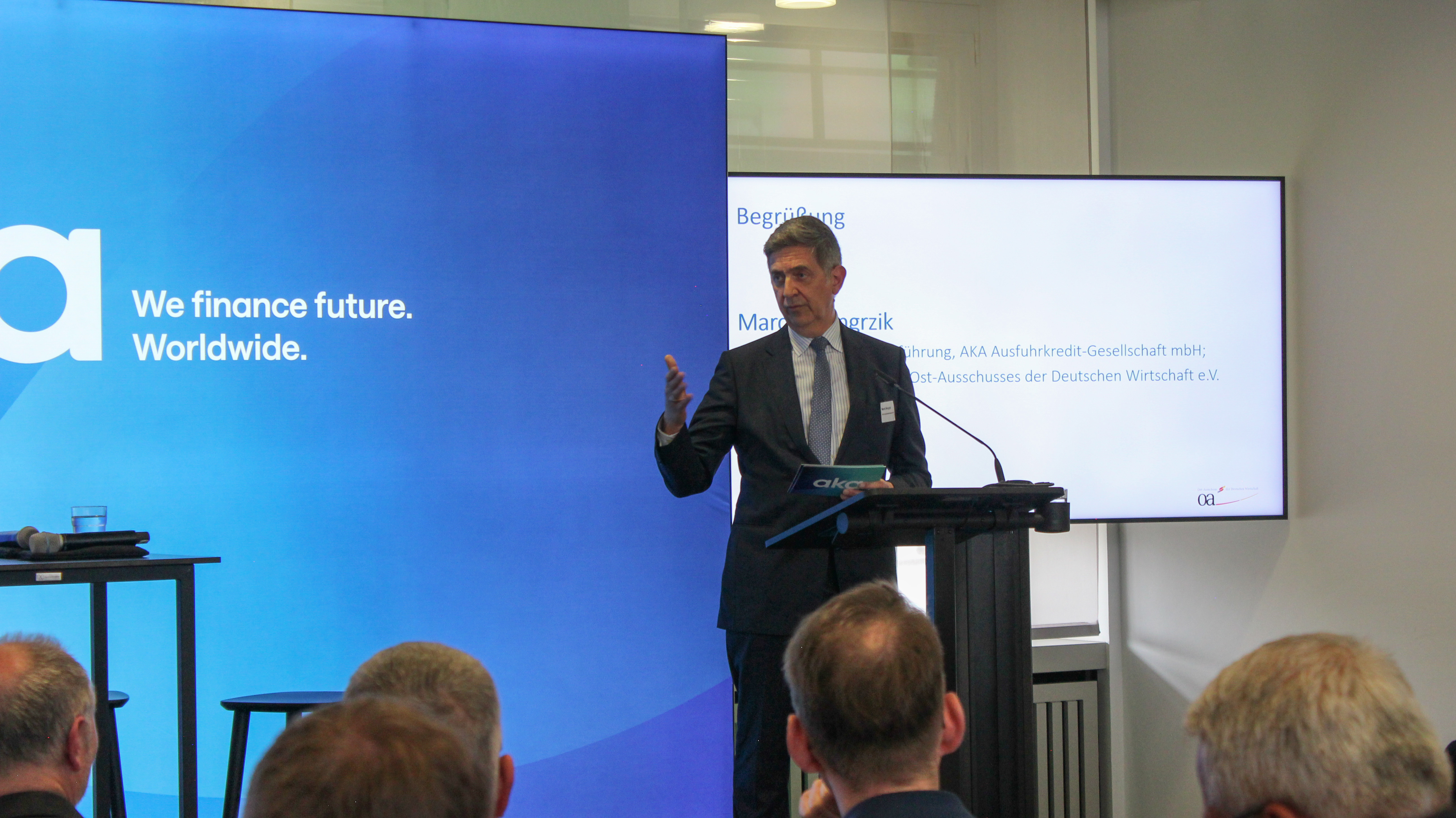
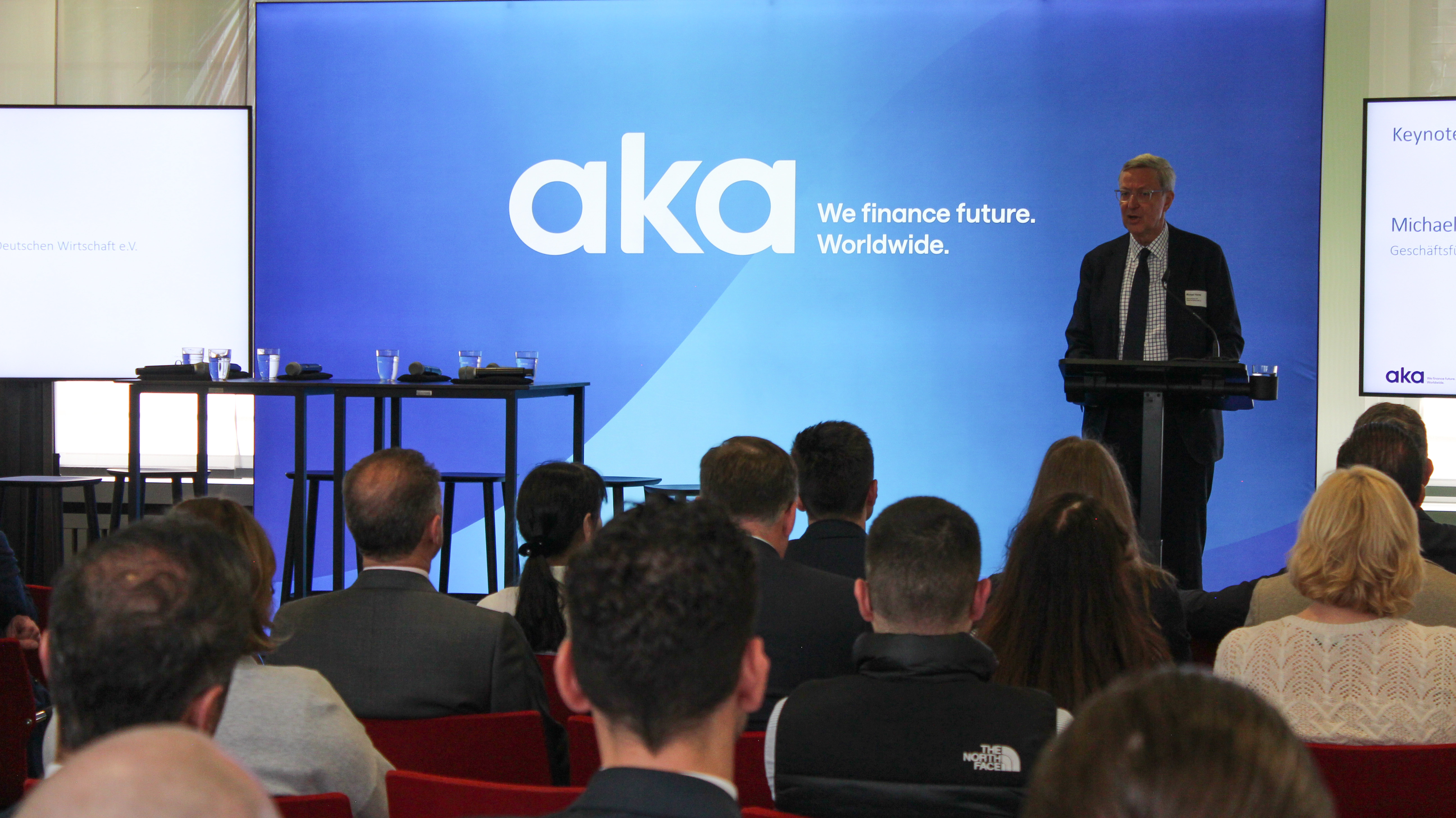
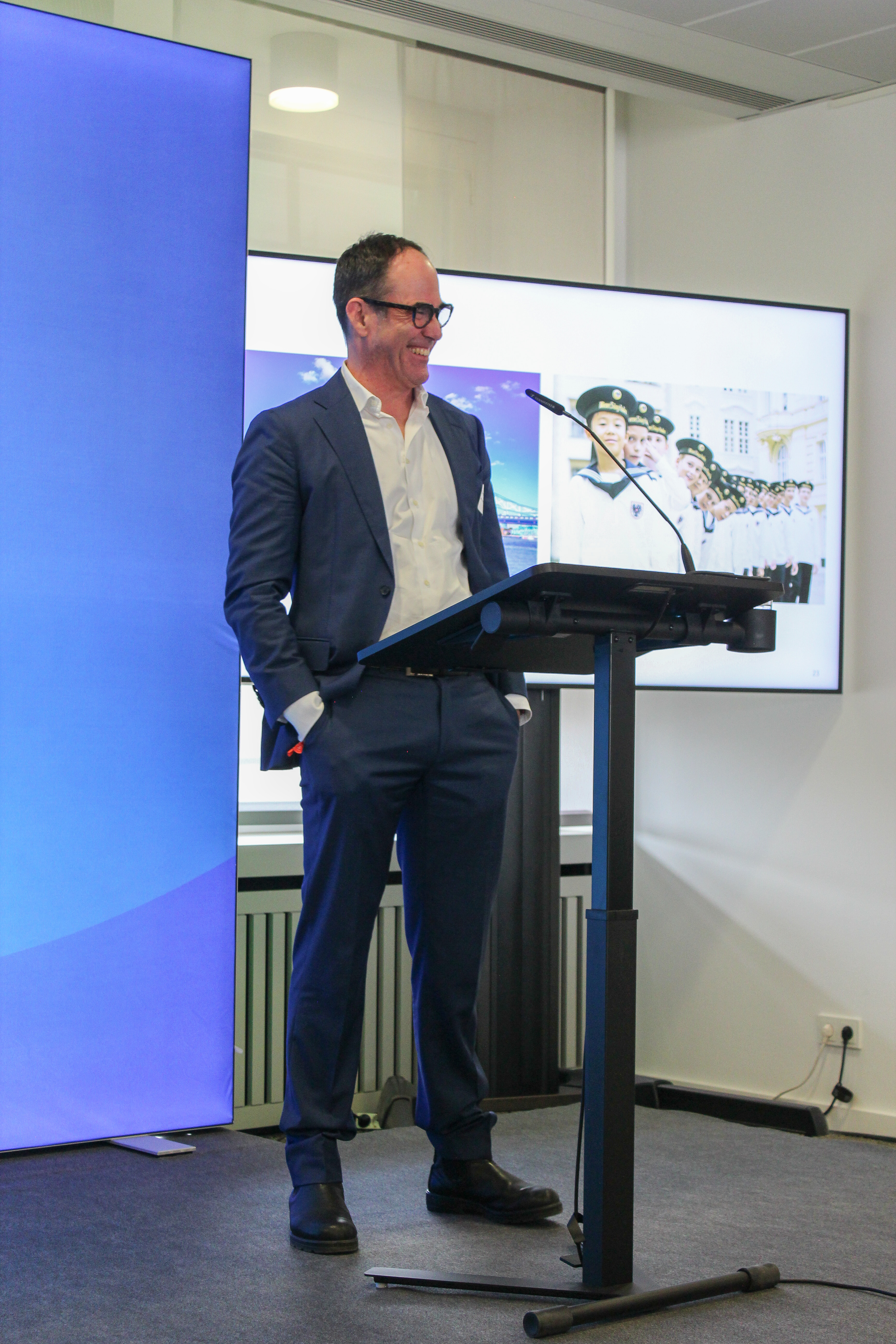
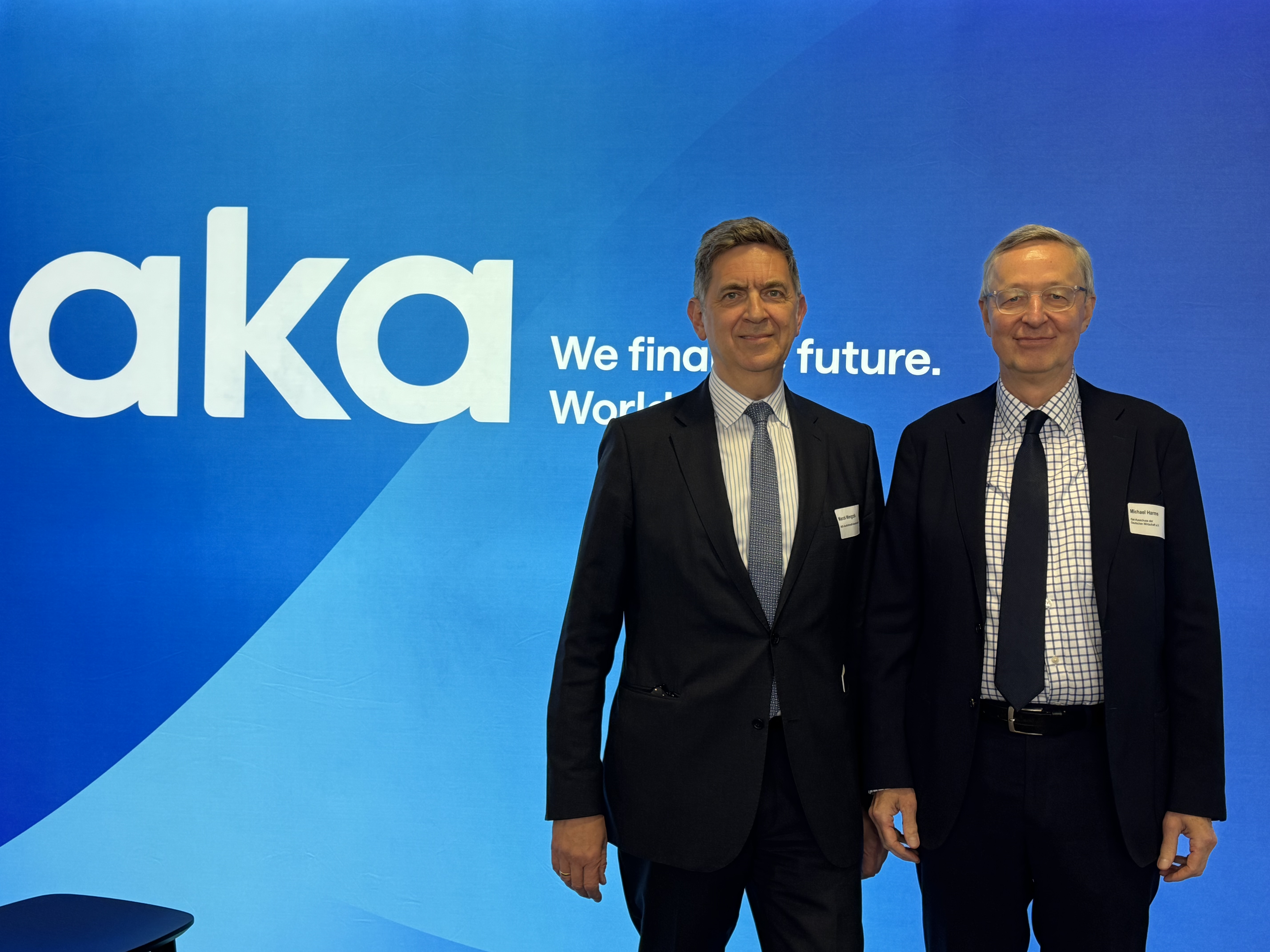
Following a welcome address by AKA CEO Marck Wengrzik, Michael Harms, Managing Director of the Ost-Ausschuss der Deutschen Wirtschaft (OA), opened the programme with a keynote speech. He emphasised the potential of the 29 countries represented in the OA as a region of opportunity for the German export industry – despite ongoing crises and complex operating conditions.
Harms described the Central and Eastern European countries in particular as powerhouses of the European single market. His ‘Four Cs’ formula – ‘close, competent, cost-efficient and can-do spirit’ – highlighted what makes the region attractive to businesses: proximity, expertise, cost-efficiency and strong implementation capabilities. Political pragmatism and a strong understanding of projects at the decision-making level further reinforce this locational advantage. His conclusion summed up the forward-looking mood in the region: “It’s morning in Central and Eastern Europe.”
Macroeconomic Outlook: The Export Economy in a Geopolitical Context
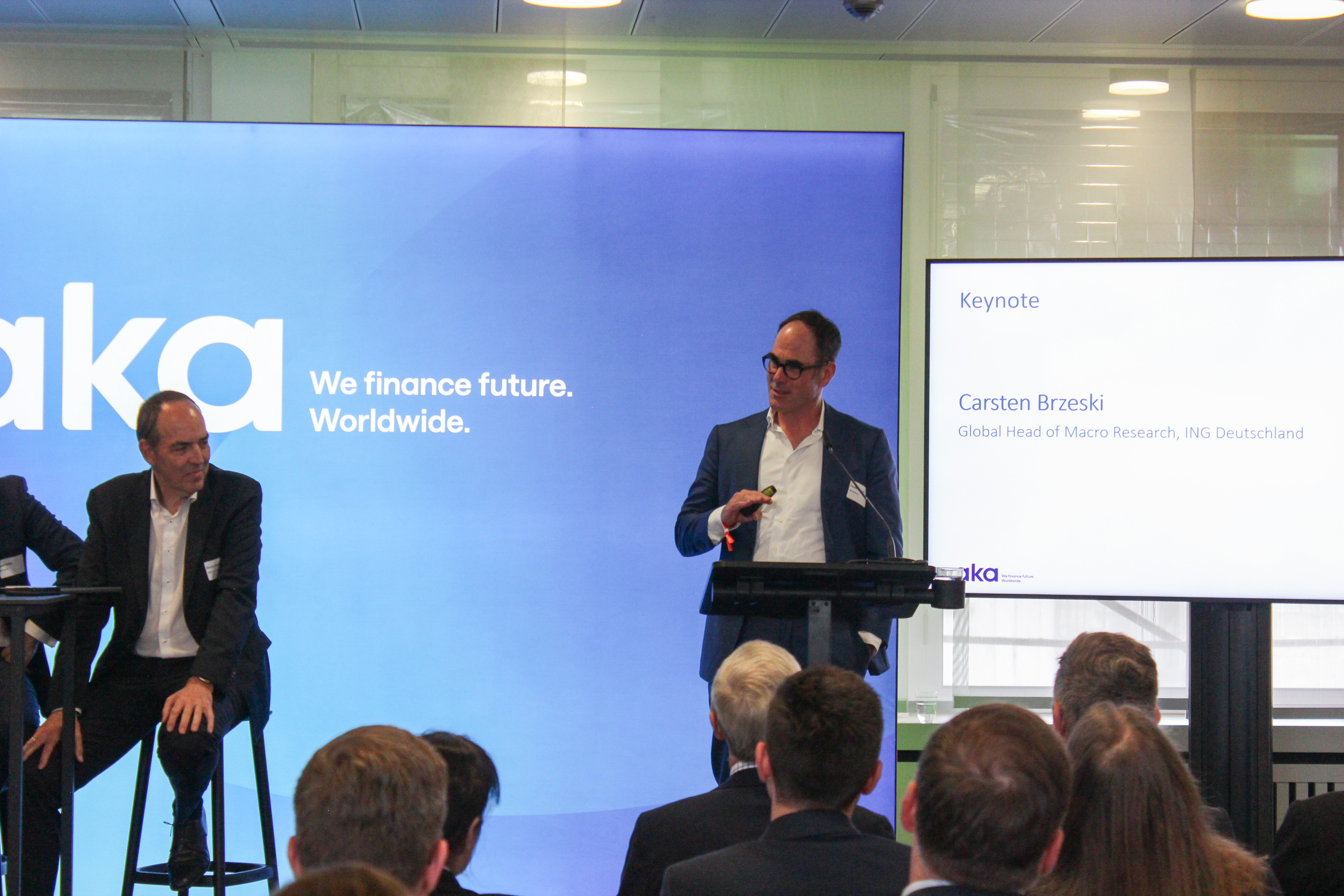
Carsten Brzeski, Global Head of Macro Research at ING Germany, provided a macroeconomic overview of the current economic climate. In his keynote speech, he provided a incisive assessment of the global economic situation, linking geopolitical risks, rising energy prices, consumer and economic trends, and structural challenges facing Germany as an industrial location to form an overall picture of the export economy. It became clear that energy, supply chains, location issues and Europe’s international competitiveness cannot be viewed in isolation. New market opportunities are emerging for German companies in Central and Eastern Europe and Central Asia. At the same time, resilient supply chains, the reduction of critical dependencies and clear strategic positioning are becoming increasingly important.
Sustainability as a key to economic success
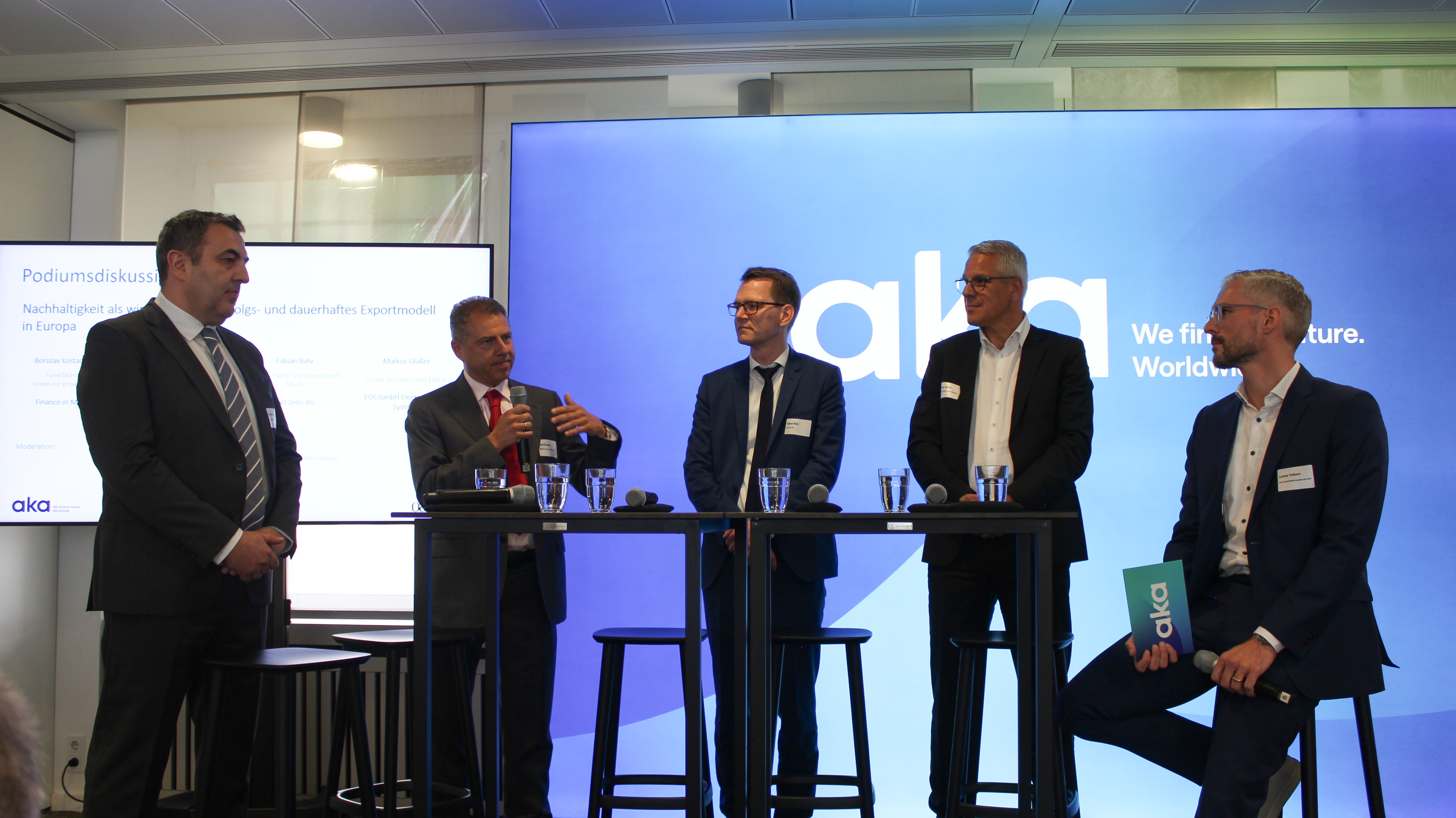
The first panel focused on the role of sustainability as a long-term European export and business model. Moderated by Lorenz Volbers, Managing Director and Head of Corporate Development & Digital Transformation at AKA, the discussion featured Borislav Kostadinov from Finance in Motion, Axel Summer from Raiffeisen Bank International, Fabian Bahr from Carl Zeiss and Markus Glaßer from EOS.
The discussion centred on how geopolitical developments, fragile supply chains and increasingly stringent trade policy conditions are affecting export and investment strategies. The discussion revealed that sustainability is evolving from a regulatory requirement into a tangible competitive factor. Particularly in innovation-driven sectors, it will be crucial to finance transformation in an economically viable manner and implement it operationally. Nearshoring, more resilient supply chains and the growing importance of Central and Eastern Europe as well as Central Asia as production, research and sales markets played a central role in this.
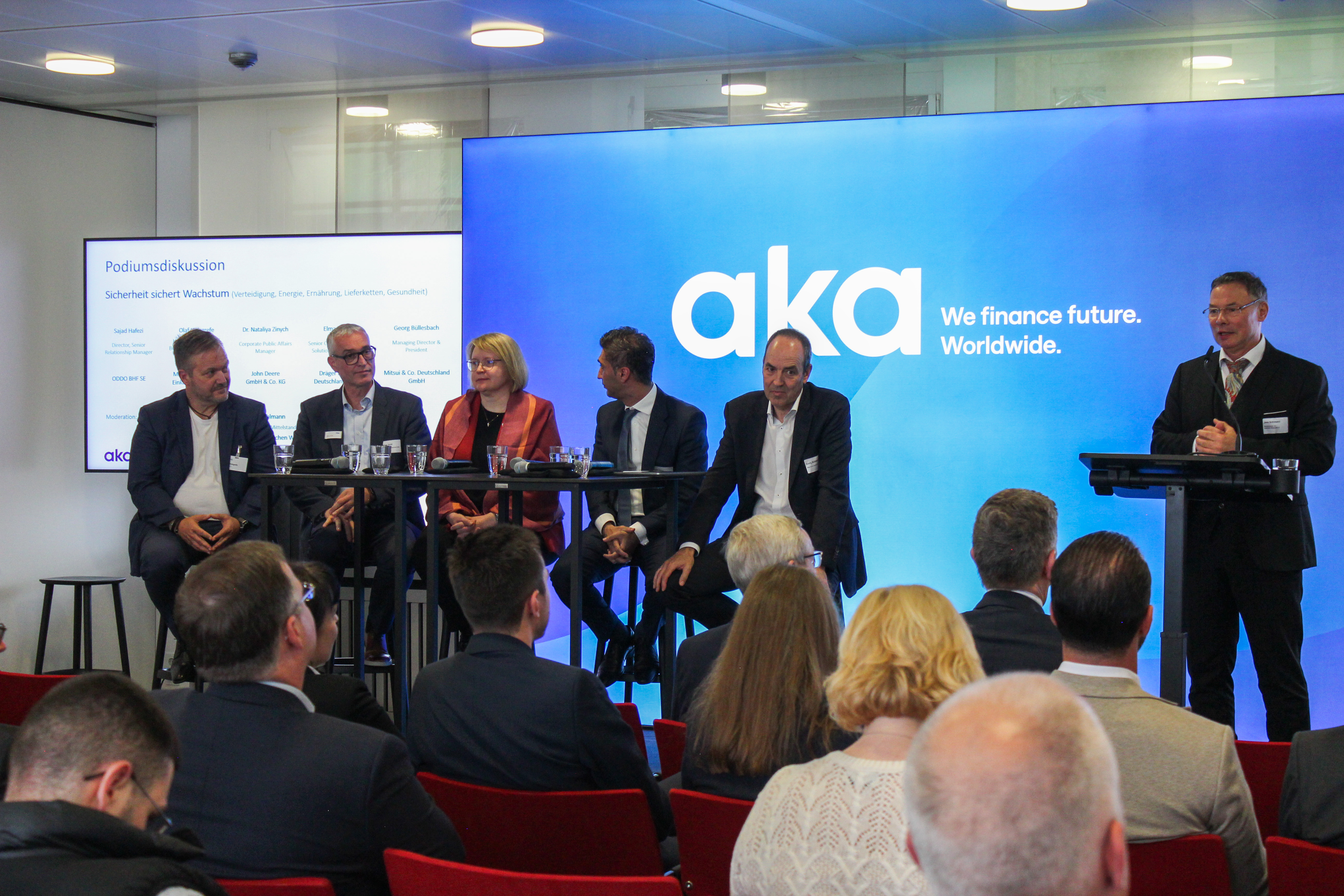
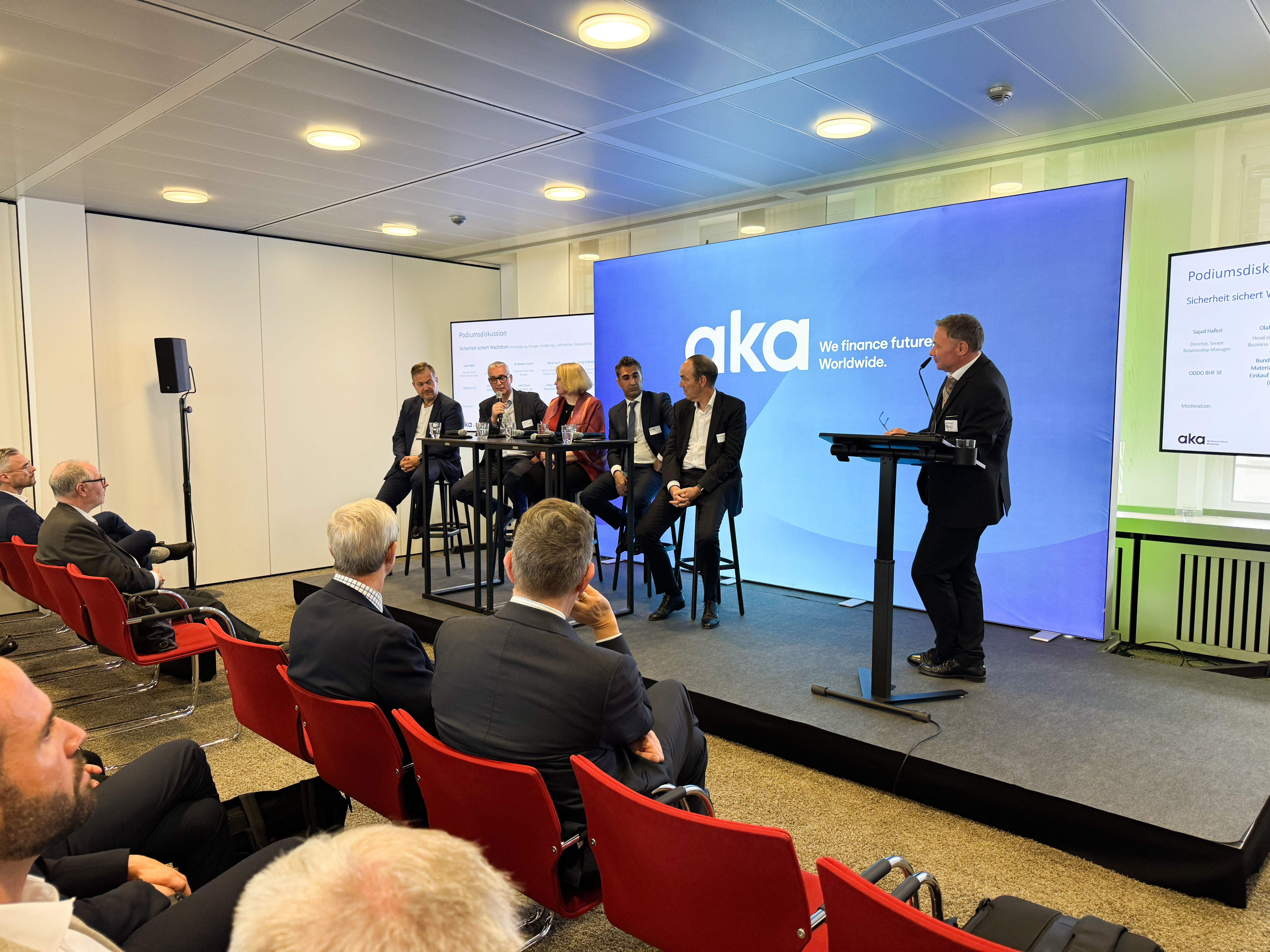
Security drives growth
The second panel was held under the theme “Security drives growth”. The focus was on defence, energy, food, supply chains and health: key sectors in which security of supply and economic development are directly interlinked. The discussion was attended by Volker Böhmer from ODDO BHF, Olaf Holzgrefe from the German Association for Materials Management, Purchasing and Logistics, Dr Nataliya Zinych from John Deere, Elmar Horst from Dräger Medical Germany and Georg Büllesbach from Mitsui & Co. Germany. Together, they examined how companies and financing partners can create robust structures to enable growth even in volatile markets.
Financing, Partnerships and Robust Networks
The Foreign Trade Conference made it clear that financing, innovation and international partnerships remain key prerequisites for successfully supporting German companies in challenging markets. Economic opportunities continue to open up, particularly in Eastern Europe and Central Asia. At the same time, demands are rising in terms of risk management, sustainability, security of supply and resilient networks. For banks, companies and institutional partners, it is crucial to create sustainable financing and cooperation structures – for growth, transformation and international competitiveness.
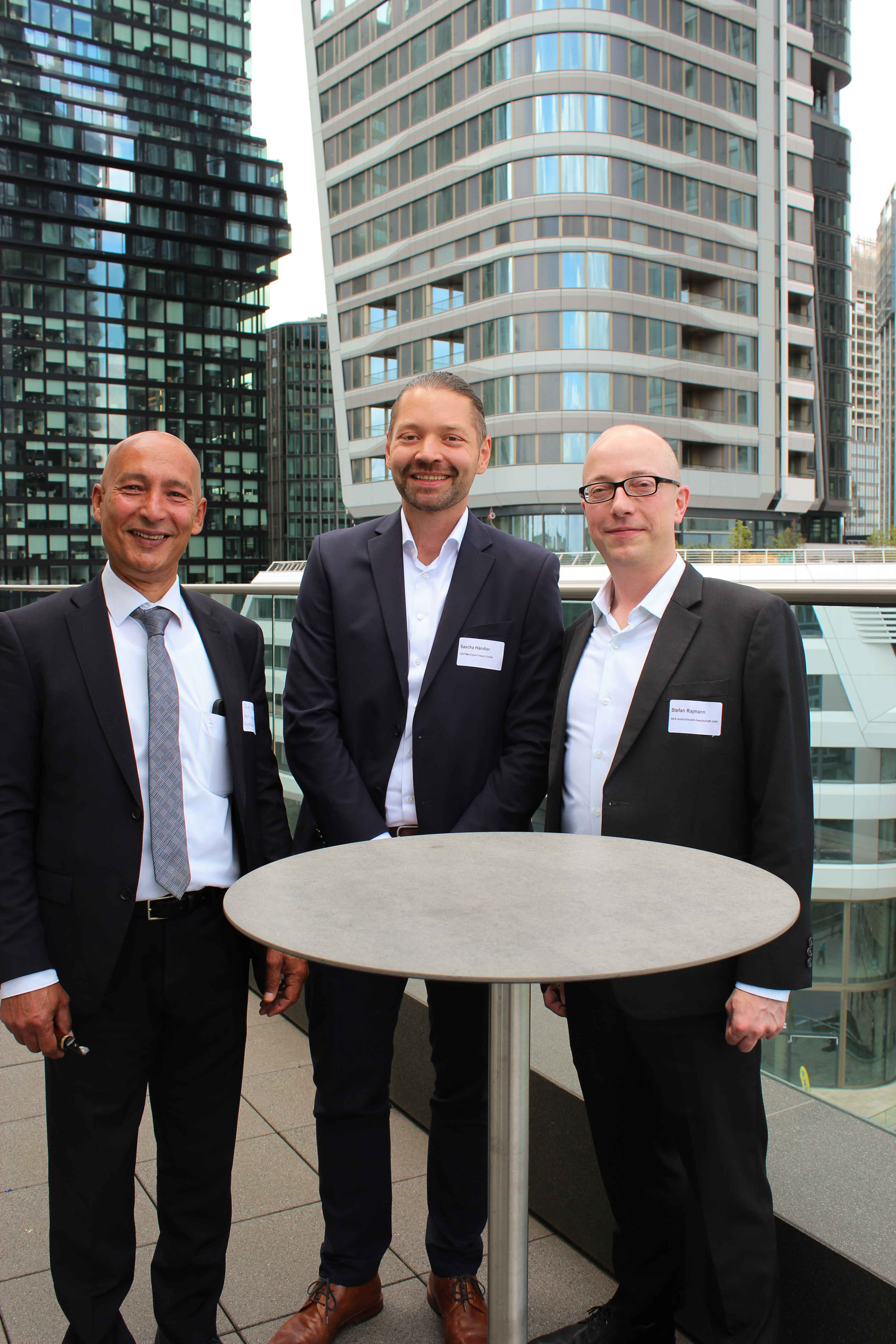
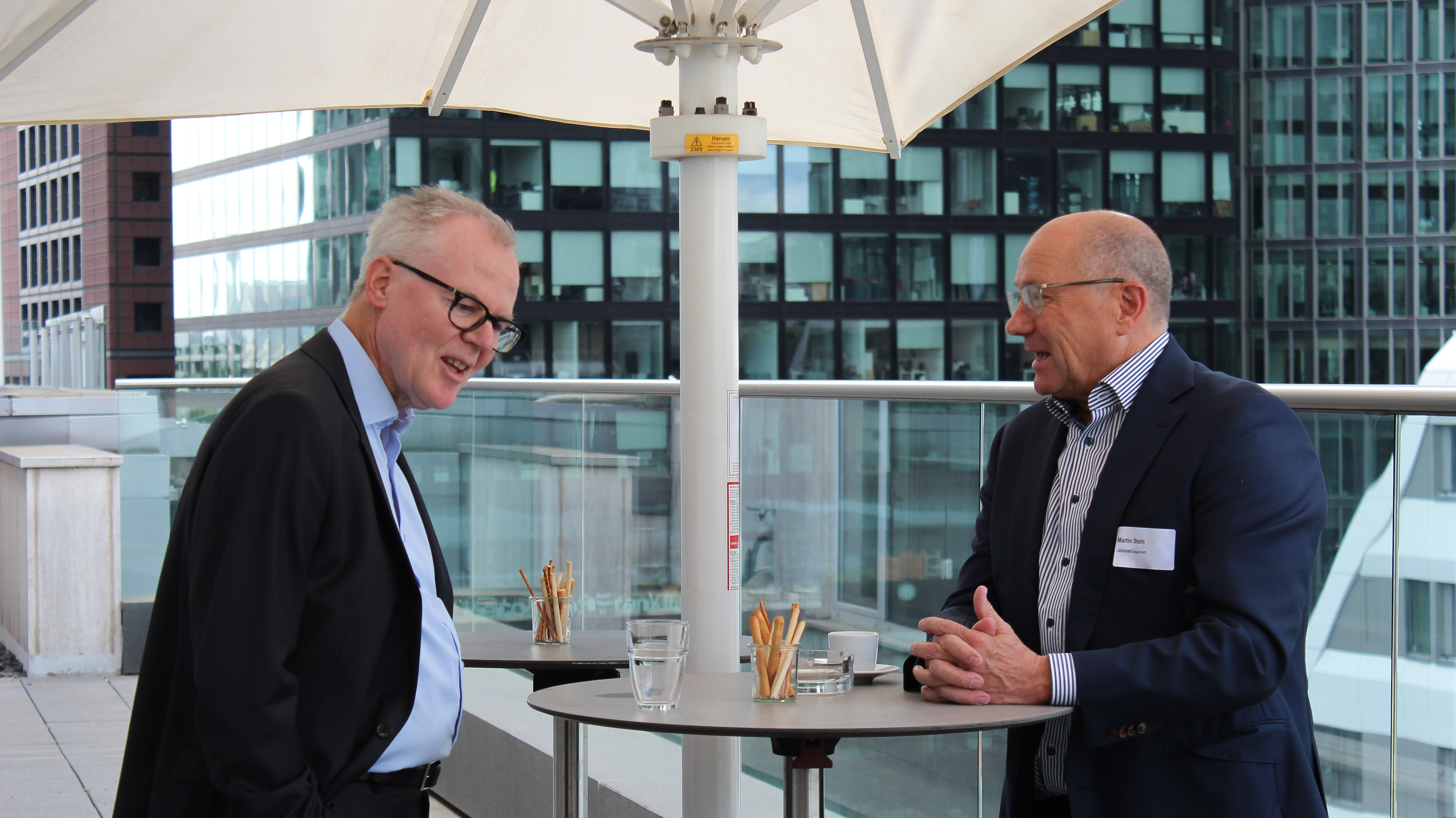
An exchange with a view
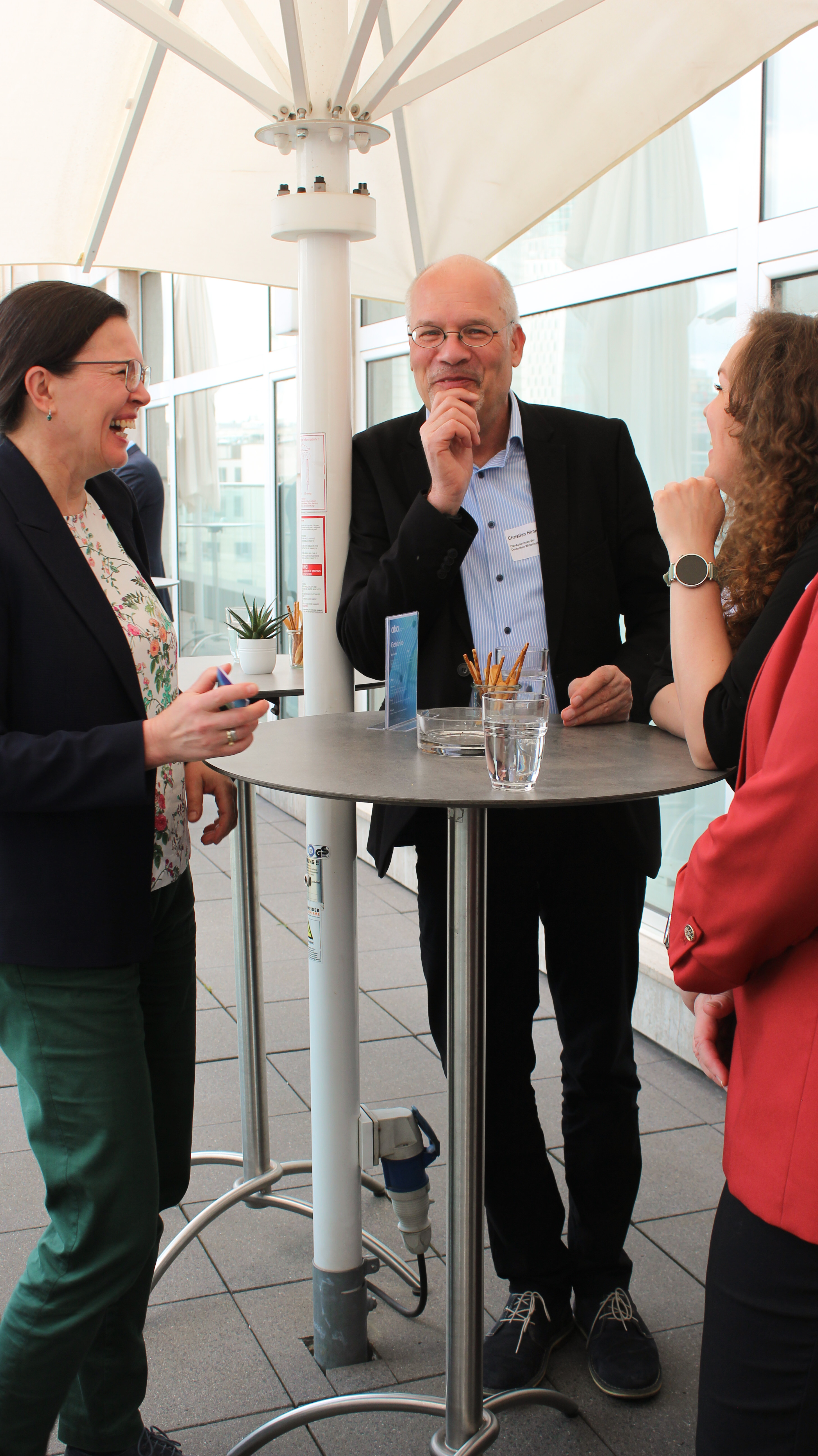
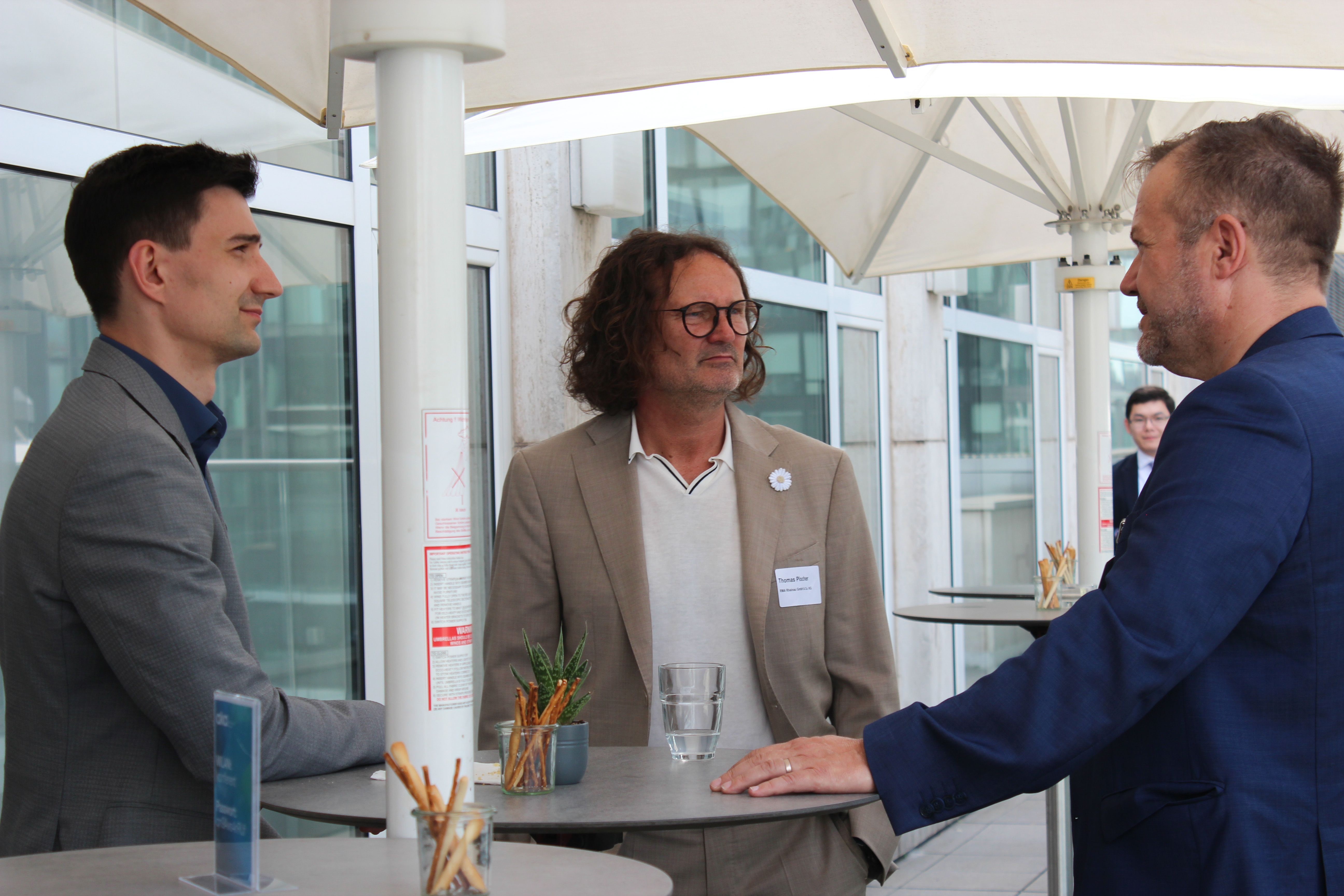
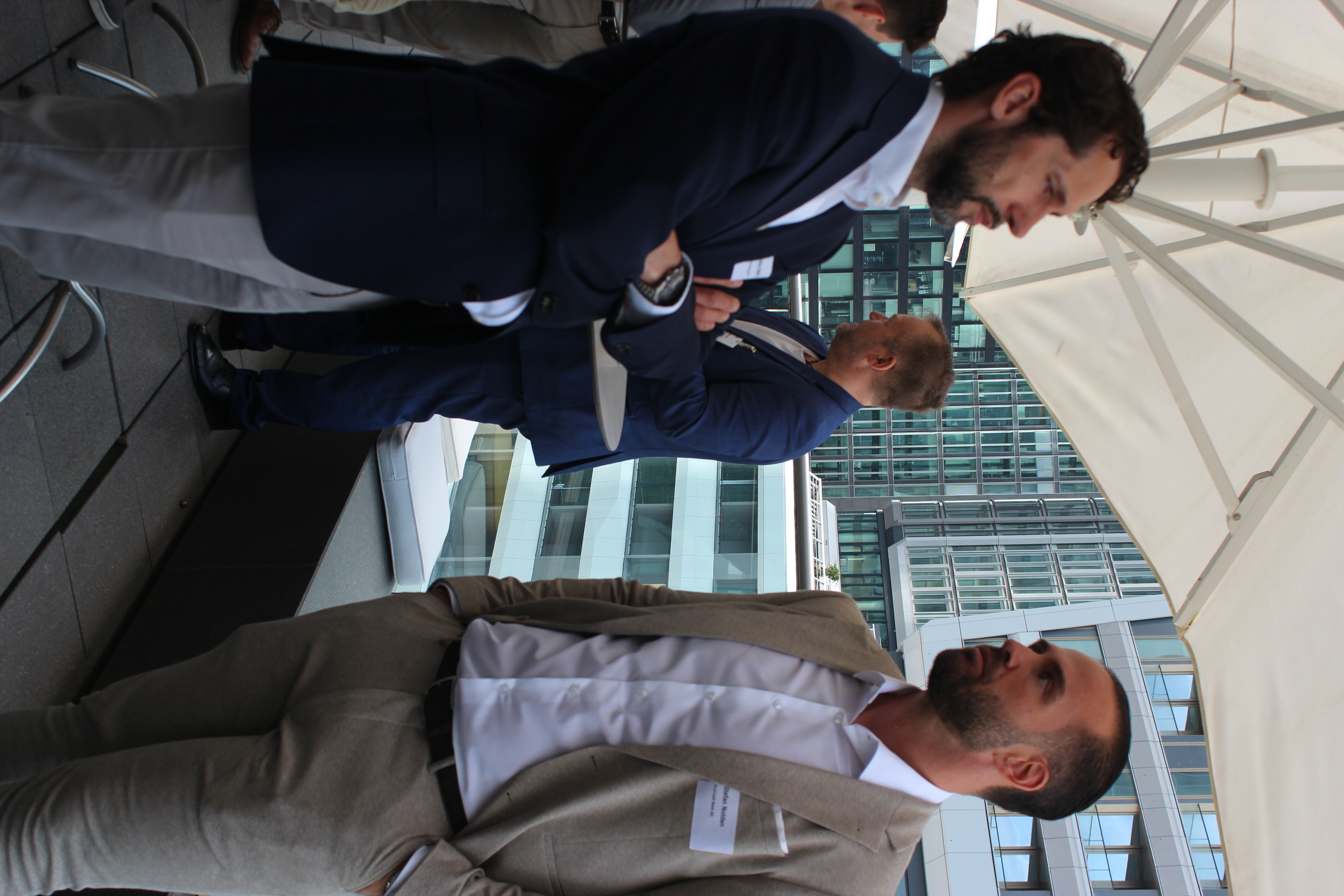
The reception that followed provided an opportunity for personal conversations, making new contacts and exploring the topics discussed in greater depth. The AKA would like to thank all the speakers, panellists and guests for the open exchange and looks forward to continuing the dialogue.